
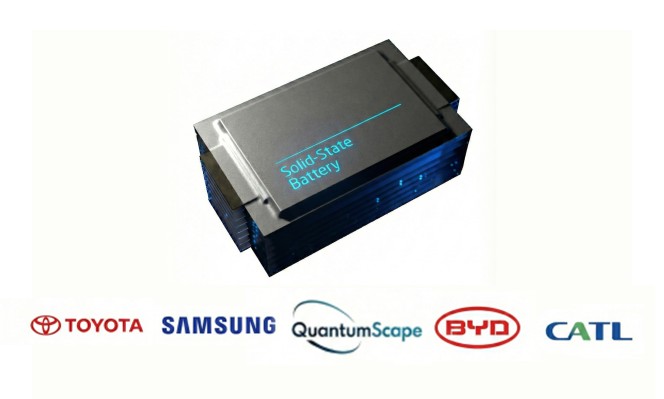
Solid-state batteries are no longer simply lab experiments. After decades of research, solid-state battery technology is entering real-world production in 2026, with major manufacturers racing to commercialize what could be the biggest leap in energy storage since lithium-ion cells were invented.
An electric vehicle that charges in five minutes, travels 1,000 kilometers without stopping, and works flawlessly at -40°C isn’t science fiction anymore. Early versions are already appearing in motorcycles and forklifts, with passenger vehicles coming soon. With companies like Toyota, BYD, and CATL announcing production timelines—and China set to release its first solid-state battery standard in July 2026—we’re watching this transformation happen in real time.
The Chemistry Behind Solid-State Batteries
The breakthrough centers on one component: replacing the liquid electrolyte with a solid one.
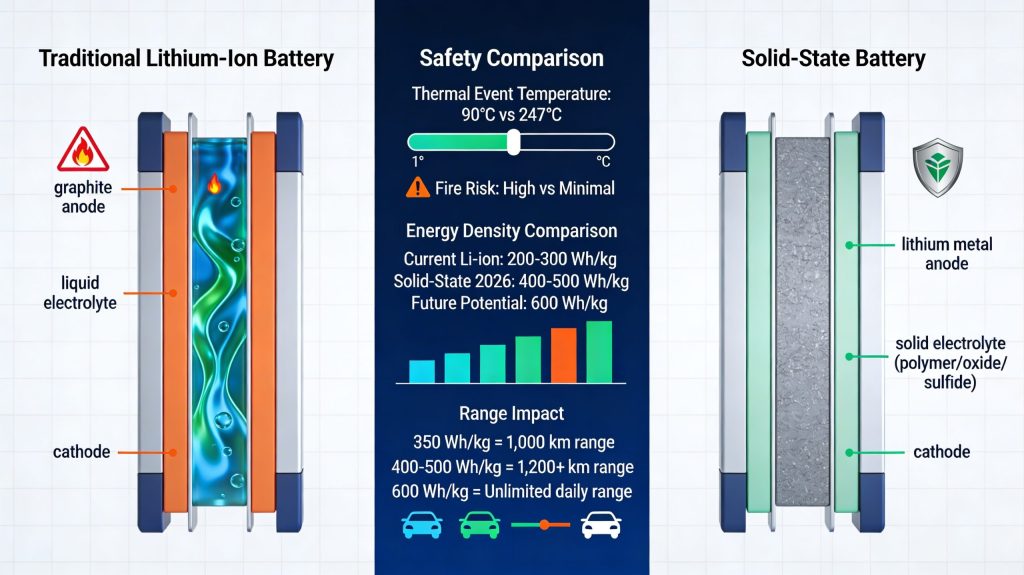
Traditional lithium-ion batteries use a flammable liquid electrolyte (a lithium salt dissolved in an organic solvent) to transport ions between the cathode and anode. The problem? Under stress—overcharging, impact damage, or high heat—this liquid can ignite, triggering thermal runaway and fire.
Solid electrolyte batteries eliminate this risk by using non-flammable solid materials (polymers, oxides, or sulfides) instead.
Comparative testing shows thermal events in solid-state systems begin at around 247°C, compared to just 90°C for conventional lithium-ion batteries.
Heat release rates are also significantly lower, meaning any thermal incident develops more slowly with less intensity.
For anyone concerned about EV safety, this is a major advancement.
Energy Density: The Real Advantage
The most exciting improvement is energy density, Wh/kg—how much energy you can store per kilogram of battery weight.
Today’s best lithium-ion batteries deliver 200–300 Wh/kg. Solid-state batteries 2026 are targeting 400–500 Wh/kg commercially, with potential to reach 500–600 Wh/kg in the coming years.
This leap comes from using lithium metal anodes instead of graphite. Solid electrolytes can safely contain lithium metal by suppressing dendrite growth—metallic whiskers that cause short circuits in liquid systems. Combined with high-voltage cathodes, this creates what researchers call the “golden combination” for next-generation batteries.
What This Means for Range
Compared to the current 150–240 Wh/kg lithium-ion batteries:
- 350 Wh/kg → roughly 1,000 km range
- 400–500 Wh/kg → 1,200+ km potential
- 600 Wh/kg (claimed by some startups) → effectively unlimited range for daily use
Other Advantages of Solid-State Battery Technology
Ultra-Fast Charging
Because solid electrolytes tolerate higher charging temperatures and currents without decomposition, several companies report 80% charge in 10–15 minutes.
Donut Lab claims 100% in as little as 5 minutes—though industry experts remain skeptical without independent verification.
Cold Weather Performance
Conventional lithium-ion batteries lose significant capacity in freezing temperatures.
Dongfeng reports its 350 Wh/kg solid-state battery retains 72% capacity at -30°C, while BYD’s FinDreams division claims stable operation at -40°C. This expands electric mobility into harsh climates that were previously impractical.
Longevity
Without liquid electrolyte degradation, solid-state vs lithium-ion batteries show superior cycle life.
Manufacturers expect over 1,000 charge cycles before dropping to 80% capacity—potentially matching vehicle lifespans and reducing replacement costs.
The Challenges Holding Back Mass Production
Interface Resistance
Liquid electrolytes naturally conform to electrode surfaces, but solid materials don’t.
Any microscopic gap increases resistance, slowing ion flow and reducing efficiency. Solving this requires precision manufacturing and new materials.
Dendrite Growth
While reduced, dendrites can still form under high current.
If they penetrate the solid electrolyte, internal short circuits may occur. Material strength and engineering innovation are critical to preventing this.
Manufacturing Complexity
Some solid electrolytes—especially sulfides—react violently with air and moisture, releasing toxic hydrogen sulfide gas.
Production requires ultra-dry environments and sealed facilities, significantly increasing costs. Ceramic oxide electrolytes require sintering at nearly 1,000°C, which adds further expense.
The Global Race: Three Electrolyte Pathways
The competition isn’t just between companies—it’s between three material approaches:
- Polymers — Easier to manufacture but require heating (>60°C) to function efficiently
- Oxides (LLZO) — Extremely stable and strong, but brittle and expensive
- Sulfides (LGPS) — High ionic conductivity at room temperature (~10⁻² S/cm), promising for fast charging, but chemically sensitive
Leading manufacturers are hedging their bets:
- CATL: Investing across all three pathways. Initial production 2027, mass production 2030
- BYD: Targeting 400 Wh/kg with 5C charging, initial production 2027
- Dongfeng: Planning 350 Wh/kg mass production by late 2026
- Toyota: Aiming for 450–500 Wh/kg, small-scale production 2027–2028
- Samsung SDI: Promising 80% charge in 9 minutes by 2027
- QuantumScape: Reporting 80% retention after 400 cycles at a 4 °C rate in lab tests
When Will Solid-State Batteries Be Available?
The rollout follows three phases:
Phase 1 – Semi-Solid Batteries (Happening Now)
Hybrid cells with 5–15% liquid electrolyte. Energy density: 300–360 Wh/kg. Already in vehicles from Nio and IM Motors.
Phase 2 – Initial Production (2026–2027)
Limited production lines. Premium vehicles first. High costs, with real-world testing to validate performance claims.
Phase 3 – Mass Production (2030+)
Competitive pricing and wider availability. Industry consensus suggests large-scale commercialization before 2030 is unlikely, despite aggressive timelines from some manufacturers.
China’s official roadmap: 350 Wh/kg liquid cells by 2025, 400 Wh/kg hybrid by 2030, and 500 Wh/kg true solid-state by 2035.
Solid-State Batteries for E-Bikes and Micromobility
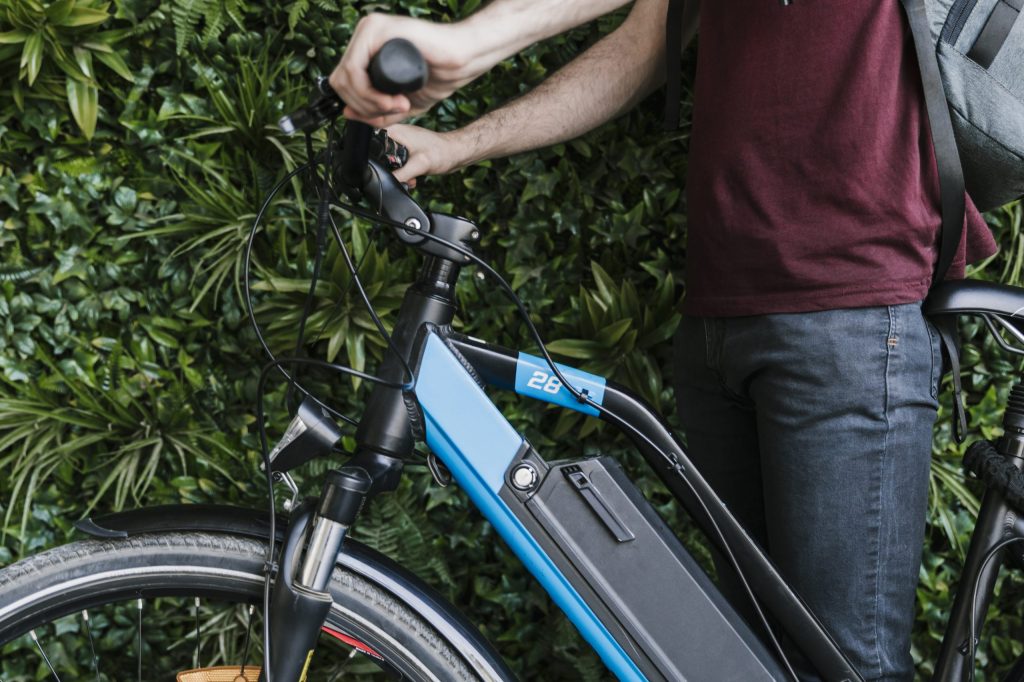
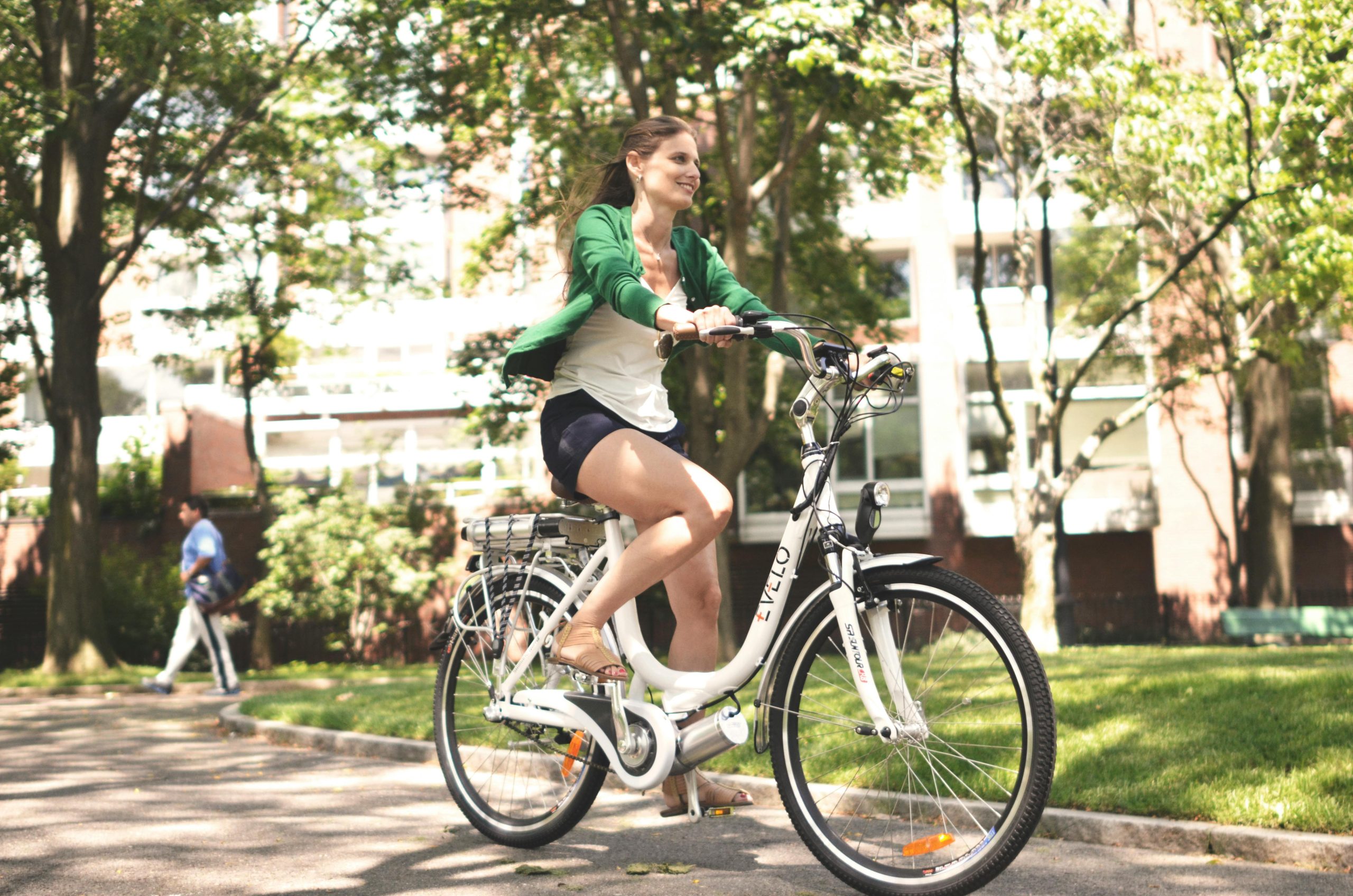
The electric vehicle battery breakthrough could hit e-bikes and electric motorcycles first. With energy densities potentially doubling current lithium-ion performance, solid-state batteries for e-bikes could deliver:
- 100–200 km range on a single charge
- 50% reduction in battery weight
- Reliable cold-weather operation
- Significantly improved safety
Early adopters like Donut Lab’s motorcycle applications hint at what’s possible, though high initial costs will likely delay widespread e-bike adoption until the early 2030s.
What to Expect Next
Solid-state battery technology isn’t arriving overnight—it’s a phased transformation spanning the late 2020s into the early 2030s.
Consumers shouldn’t expect fully solid-state EVs tomorrow, but semi-solid andadvanced hybrid batteries are appearing now.
With China’s solid-state battery standard launching in July 2026 and multiple manufacturers beginning pilot production this year, the pieces are finally coming together.